
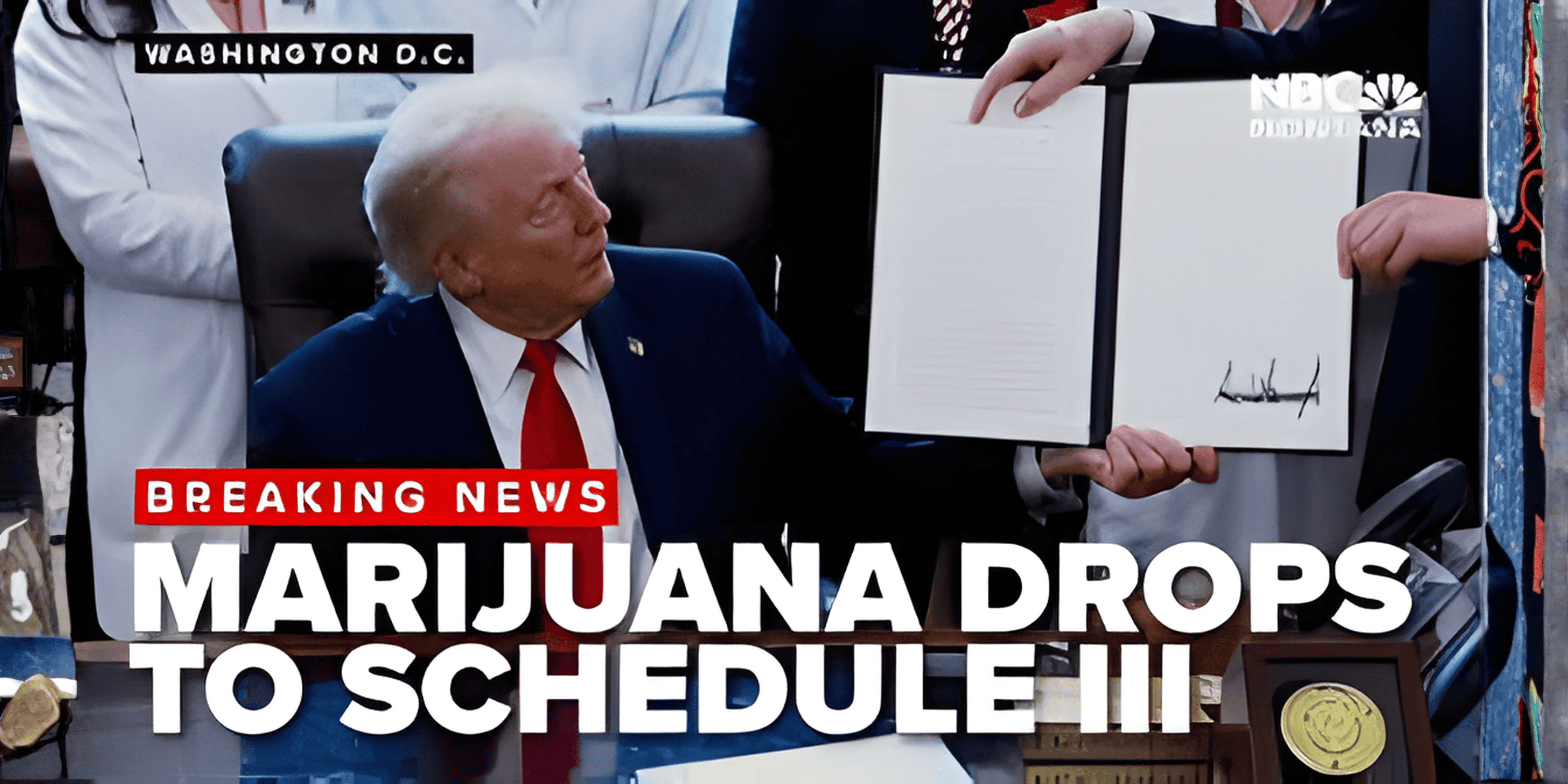
Schedule III Cannabis: Understanding the Focus, Scope, and Industry Impact
The December 18, 2025 White House executive order directing the Attorney General to complete marijuana rescheduling to Schedule III represents a fundamental shift in federal cannabis policy. The core focus of Schedule III classification centers on formal federal recognition that cannabis possesses currently accepted medical use and demonstrates lower abuse potential compared to Schedule I and II controlled substances. This stands in sharp contrast to its decades-long Schedule I designation, which legally defined marijuana as having no accepted medical value and high abuse potential.

What Schedule III Classification Actually Means
Schedule III substances under the Controlled Substances Act are defined by three key characteristics: accepted medical use in treatment within the United States, abuse potential lower than Schedule I/II drugs, and moderate-to-low physical dependence risk or high psychological dependence potential. The HHS recommendation supporting this reclassification cited over 30,000 licensed healthcare practitioners across 43 U.S. jurisdictions authorized to recommend medical marijuana for more than 6 million registered patients treating at least 15 medical conditions. FDA found credible scientific support for cannabis treating pain, anorexia related to medical conditions, and chemotherapy-induced nausea and vomiting—conditions affecting millions, including nearly 1 in 4 U.S. adults with chronic pain.
Primary Focus Areas of Schedule III Rescheduling
Medical Research Liberation
The executive order emphasizes that Schedule I status “impeded research” and left American patients and doctors “without adequate guidance on appropriate prescribing and utilization”. Schedule III removes significant bureaucratic barriers: researchers no longer need special DEA licenses exclusively for Schedule I studies, institutional review boards face simplified approval processes, and pharmaceutical companies can conduct clinical trials using frameworks similar to other accepted medications. The order specifically mandates research methods utilizing real-world evidence to rapidly assess health outcomes while focusing on long-term effects in vulnerable populations like adolescents, young adults, and seniors on multiple medications.
Federal Tax Relief Under 280E Elimination
Currently, IRS Code Section 280E prohibits businesses trafficking Schedule I/II substances from deducting ordinary business expenses—effectively imposing 70%+ tax rates on state-legal cannabis operators . Schedule III reclassification removes this barrier, allowing standard business deductions for rent, payroll, marketing, and operational costs . This frees billions in capital for inventory expansion, facility upgrades, compliance investments, and market expansion—directly impacting demand for inputs like pre-rolled cones as operators reinvest savings into product lines and distribution.
Medical Legitimacy and Healthcare Integration
The order notes that only 56% of older Americans using marijuana discussed usage with healthcare providers, placing patients—especially seniors on multiple medications—at increased risk of drug interactions or adverse events. Schedule III status enables formal physician prescribing frameworks, integration with electronic health records, and pharmacy dispensing pathways if products undergo FDA approval. While existing state-regulated products remain outside this framework until individually approved, the classification establishes infrastructure for medical cannabis to function within mainstream healthcare rather than as a parallel gray-market system.
Reduced Social and Regulatory Stigma
Federal acknowledgment of medical value diminishes the decades-long stigma that deterred institutional investors, banks, and conservative states from engaging with cannabis markets. Schedule III signals to risk-averse stakeholders—pension funds, insurance companies, large retailers—that cannabis is a legitimate sector worthy of traditional commercial engagement . This cultural shift accelerates state-level medical program adoption, encourages employer policy modernization, and normalizes cannabis within public health discussions.
Banking and Financial Services Access
Federal banking regulators have historically advised institutions to avoid cannabis clients due to Schedule I status creating money-laundering and asset-forfeiture risks . While Schedule III doesn’t automatically resolve all banking challenges (products remain federally illegal without FDA approval), it significantly reduces perceived risk, enabling checking accounts, credit card processing, commercial loans, and insurance products that currently operate through workarounds or aren’t available at all .
What Schedule III Does NOT Accomplish
No Recreational Legalization
The reclassification maintains federal prohibition on non-medical cannabis use. Adult-use programs remain state-level initiatives operating in tension with federal law, and possession/distribution outside state-regulated systems continues to carry criminal penalties.
FDA Approval Still Required for Pharmacy Dispensing
Schedule III drugs sold through pharmacies—like codeine or ketamine—require rigorous FDA approval demonstrating safety and efficacy through multi-phase clinical trials. Current dispensary products sold under state medical programs have not undergone this process and would remain outside traditional pharmacy channels unless manufacturers pursue expensive, years-long FDA pathways.
State-Legal Products Remain Federally Illegal
Until individual products receive FDA approval, marijuana sold through state-regulated dispensaries technically violates federal law even under Schedule III. However, federal enforcement policy has generally avoided targeting state-compliant businesses, and rescheduling reinforces this non-interference approach by acknowledging medical validity.
Impact on Pre-Rolled Cones and Cannabis Supply Chain
For manufacturers like NORML Cones producing pre-rolled cones for USA/Canada export, Schedule III rescheduling drives three major shifts :
Demand Growth: Tax relief and expanded access increase dispensary purchasing power, driving bulk orders as operators stockpile inventory and launch new SKUs . The pre-rolls category already grew 11.89% to $4.1B across 394M units sold in 18 months; rescheduling momentum could accelerate this to 20% of total cannabis sales by 2030 .
Quality and Compliance Standards: Medical legitimacy raises buyer expectations for documented traceability, lab-verified materials, and audit-ready processes. Cone suppliers with ISO/GMP/HACCP certifications—like NORML’s Gurugram facility—differentiate as professional partners versus commodity vendors.
Product Innovation: Research expansion drives demand for medically optimized formats: consistent dosing, controlled burn rates, pharmaceutical-grade papers, and packaging compatible with clinical tracking. Manufacturers collaborating on research-aligned specifications position as innovation partners capturing premium pricing .
Timeline and Next Steps
The executive order directs the Attorney General to complete rescheduling “in the most expeditious manner,” but confirms DOJ’s May 2024 proposed rule still awaits administrative hearings after receiving 43,000 public comments. Industry analysts expect final implementation in mid-to-late 2026, with immediate preparation recommended for compliance documentation, inventory planning, and buyer relationship development.
Schedule III reclassification focuses on unlocking medical research, removing tax penalties, providing healthcare legitimacy, and reducing financial/social barriers—not on legalizing recreational use or eliminating FDA oversight. For cannabis supply chains, this means larger addressable markets with higher professionalization standards favoring compliant, scalable manufacturers ready to serve an expanding, research-driven industry .